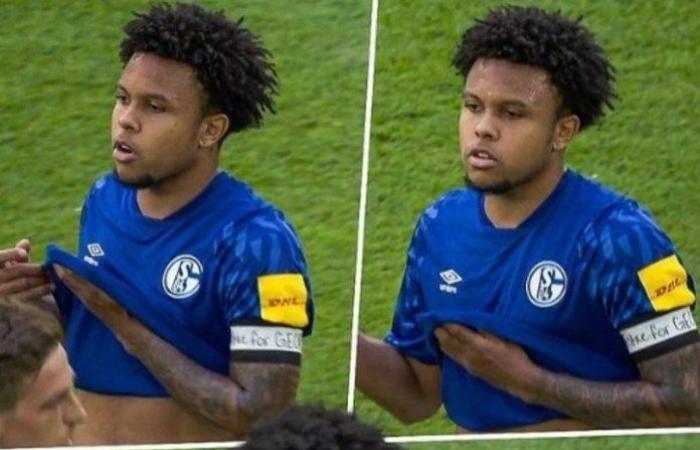
In Milan, a young Texan named Weston Mckennie scored for Juventus, helping the Italian giants topple league leaders AC Milan. In Manchester, Pennsylvanian goalkeeper Zack Steffen kept a clean sheet for City, sending them to the Carabao Cup final. While these US men’s national team stars played on two of the biggest stages in world football, right wing rioters stormed the Capital building in Washington D.C. to halt the certification of the US presidential election. As US soccer fans celebrated Mckennie’s goal, news outlets covered white nationalists ransacking the offices of US congresspeople. These “protestors” who broke the doors and windows of the US Capital were met with little police or military response in the first few hours after breaking in.
In circumstances such as these, the political contradictions of our national team are more apparent than ever. Weston Mckennie himself said (as a Black man), that he represents a country that “possibly doesn’t even accept me, just for the color of my skin.” Mckennie along with Steffen and a large group of other Black players, represent a country built on slavery and apartheid, in which 1,609 black people were killed by police between 2013 and 2019.
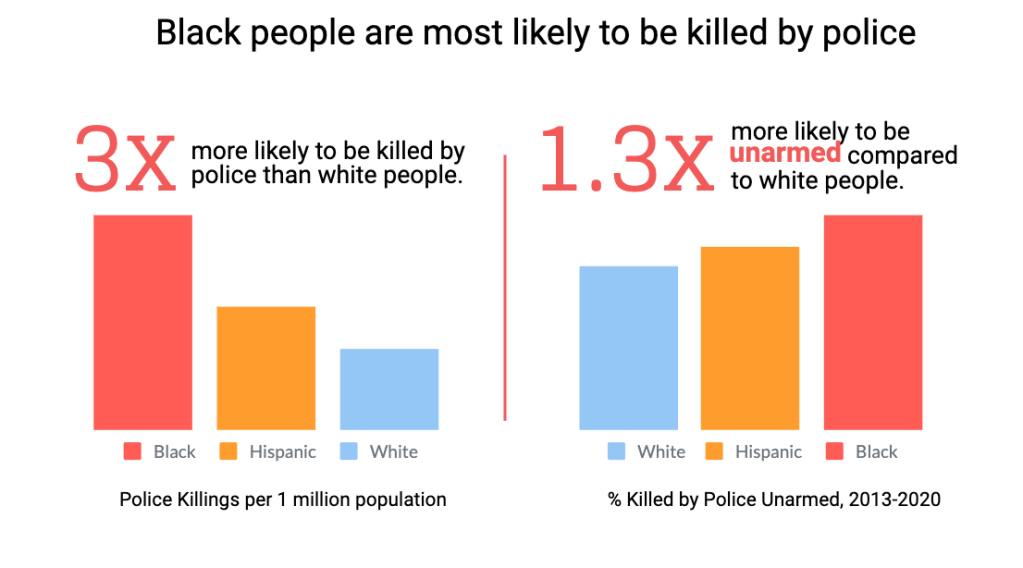
Racism in policing is such a problem that it led US right back Deandre Yedlin to contemplate quitting the national team. The right back who plays for Newcastle in the Premier League said to Sky Sports that he had a hard time representing a country where “all people aren’t equal.” The United States has long harbored white nationalists in its government and police forces, which is exemplified in the incitement and response (or lack thereof) which culminated in the takeover of the US Capital. Indeed, the US president (Trump) has emboldened–arguably explicitly supported–white supremacists.
National teams are a source of pride for the countries they represent, and are inseparable from a country’s politics. Cheering for the national team while players like Mckennie are scared of driving while Black in the US, should expose to every fan the lie that sports are apolitical. While US fans pin their hopes to a talented crop of Black players, too many fans are silent in the struggles that Black players face. Mckennie and Steffen have both protested in support of the Black Lives Matter movement during games played for their non-US teams. Their protests, repudiate the idea that sports can exist outside the racist mess that is the US political sphere. In the United States, as seen in the NFL with Colin Kaepernick and US Soccer ban on protests during the national anthem, sports are used to maintain the status quo.
When US Soccer revoked the anti-protest policy after George Floyd’s death last summer, it represented a small piece of the large reckoning US soccer needs to support its Black players. The federation, which finally allowed protest messages on warm up jackets this year, has never had a Black head coach. Additionally, the board of US soccer is all white. On a basic diversity level, US Soccer is failing. If the USMNT is to have success, it will be due to their Black players. The same players they do not offer enough support for.
It is not uncommon for countries to rely on often persecuted minorities in their national teams. France’s world cup team consisted of many Black players, some of which have heritage from countries France colonized. Germany is another example with their famed “Multi-kulti Elf.” These national teams make good money from the performances of their minority stars while insufficiently fighting the white supremacist and ethno-fascist movements as well as cases of police discrimination and violence within their countries.
The juxtaposition of Mckennie and Steffen’s respective successes, and the coup attempt at the Capitol building should serve as evidence that taking pride in the United States (even its soccer team), without standing up against right-wing violence and systemic racism, is a contradiction of great proportions. Black players make up the backbone of the USMNT today, just like Black people have always been the backbone of the best segments of America. Fandom of and reliance on Black players without extending support for activism to protect their lives, is entirely superfluous and colonial in nature. Black players are more than vehicles to national team success; their lives and their futures deserve to be protected.
Soccer is inherently political, and if no day before did, this one proves it. US Soccer, US Soccer fans: Do better.
 Red Card News